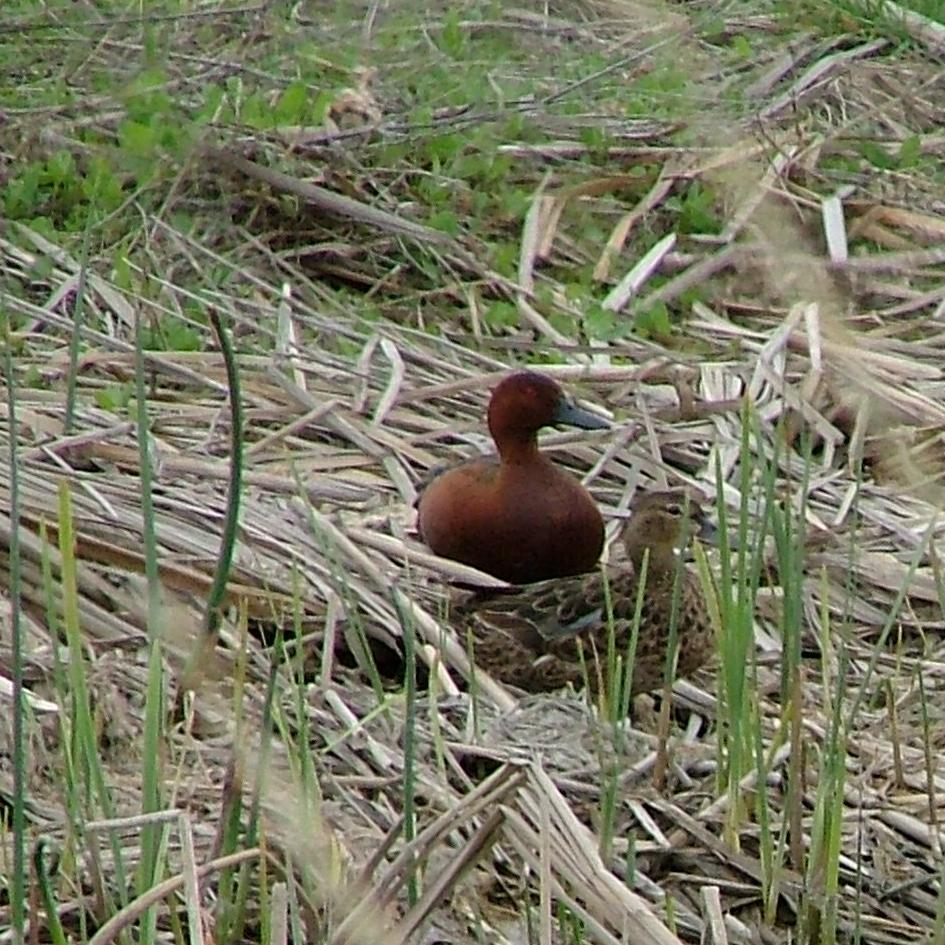
Cinnamon Teal at the
Bear River Migratory Bird Refuge
Anas cyanoptera
Courtesy US FWS
The choices we make daily, at home, at work, and in our communities, can help create a safer, healthier world for birds. Living bird-friendly means taking thoughtful steps to reduce the hazards birds face and to create spaces where they can thrive.
Whether it’s designing bird-safe buildings, planting native vegetation, or making mindful consumer choices, everyone can play a part in protecting birds and the ecosystems we share.
- Contents on this and Associated Pages:
-
- Cats Inside Page
- Keep cats indoors or safely contained. It’s better for both birds and cats.
-
- Dark Skies Page
- Support dark skies. Reducing light pollution helps migrating birds navigate safely.
-
- Grow Native for Birds Page
- Grow native plants. Native trees, shrubs, and flowers provide food, nesting materials, and shelter for birds year-round.
-
- Pesticides Page
- Avoid harmful chemicals. Use integrated pest management to minimize pesticide use and protect birds and insects.
-
- Protect Birds Against Window Strikes Page
- Prevent window collisions. Make your windows visible to birds to reduce deadly strikes.
-
- Protecting Against Plastic Polution Page
- Reduce plastic waste. Small actions like saying no to single-use plastics, protect birds from pollution.
-
- Smithsonian Bird Friendly Coffee Page
- Choose bird-friendly products. Buying Smithsonian Bird Friendly® Coffee supports sustainable farms that provide safe habitats for migratory birds.
-
- Wilderness Stewardship Page
- Living bird-friendly doesn’t stop at home. Join community efforts in urban and wilderness stewardship from volunteering in habitat restoration projects to supporting bird-safe building policies. Every action helps create a network of safe, thriving habitats for birds across our region.
-
- Wildlife Rehabilitation
- Review rehabilitation resources across the state
-
- Wildlife Mortality
- Report bird mortalities both for West Nile Virus and for Window Strikes to help reduce both
Start Where You Are
At home:
- Keep cats indoors or safely contained. It’s better for both birds and cats. Learn more about Cats Indoors.
- Prevent window collisions. Make your windows visible to birds to reduce deadly strikes. Explore solutions for Window Strikes.
- Grow native plants. Native trees, shrubs, and flowers provide food, nesting materials, and shelter for birds year-round. Learn more about Growing Native for Birds
- Avoid harmful chemicals. Use integrated pest management to minimize pesticide use and protect birds and insects. Find tips on Pesticide Reduction.
In your community:
- Support dark skies. Reducing light pollution helps migrating birds navigate safely. Learn how to keep our skies dark.
- Reduce plastic waste. Small actions like saying no to single-use plastics, protect birds from pollution. See how plastic pollution affects birds.
- Choose bird-friendly products. Buying Smithsonian Bird Friendly® Coffee supports sustainable farms that provide safe habitats for migratory birds.
Take It Beyond Your Backyard
Living bird-friendly doesn’t stop at home. Join community efforts in urban and wilderness stewardship from volunteering in habitat restoration projects to supporting bird-safe building policies. Every action helps create a network of safe, thriving habitats for birds across our region.
Bird-Friendly Bingo
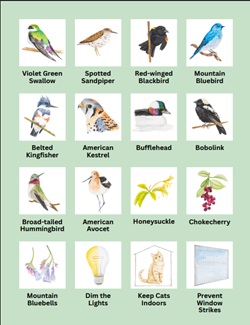
Bird-friendly Bingo Card Key
Courtesy & © Meg Kast, Designer
Together, small changes add up to big impacts for birds. Start today, right where you are!
Resources
Bridgerland Audubon Pages
National Audubon Pages
Other Resources
- Morse, Susan, To Feed or Not to Feed Wild Birds, Bird Feeders Can Be Sources of Joy — and Disease, US Fish & Wildlife Service, https://www.fws.gov/story/feed-or-not-feed-wild-birds
- Huizen, Jennifer, To Feed, or Not to Feed; Backyard feeders are good for birds, as long as you follow these simple guidelines., National Audubon, April 24, 2015, https://www.audubon.org/news/to-feed-or-not-feed
- A Bird Safe Yard Is Absolutely Essential, OrnithologyCenter.com,, Acopian Center for Ornithology at Muhlenberg College, https://ornithologycenter.com/bird-safe-yard-absolutely-essential/