
Click to view the Mosquito Flyer PDF
Courtesy Logan City Mosquito Abatement
With warmer temperatures arriving across the state, mosquito season is getting an early start. With early warm weather we get aggressive mosquitos. (See KSL Video: Mosquito season kicks off early in Salt Lake City)
The mild winter portends a big year for insect pests.
“A successful integrated mosquito control strategy includes several tactics to eliminate mosquitoes and their habitat. Four critical tactics include:
- Remove Mosquito Habitats
- Use Structural Barriers
- Control Mosquitoes at the Larval Stage
- Control Adult Mosquitoes
Success in Mosquito Control: An Integrated Approach, US EPA, https://www.epa.gov/mosquitocontrol/success-mosquito-control-integrated-approach
To prevent damage to natural mosquito controls, such as fish, insects and birds, we encourage emphasis on the first three of the above and limit open spraying or fogging to areas with no other options.
Wildlife Mosquito Controls:
Many wildlife species eat mosquitoes, particularly birds, bats, fish, dragonflies, and frogs. These natural predators are highly effective at controlling populations, with some bats eating up to 1,000 mosquitoes an hour. Dragonflies, fish and bacteria are key consumers of mosquito larvae in water.
- Bacteria:
- Bacillus thuringiensis israelensis (Bti) is a natural soil bacteria used as an environmentally safe larvicide to control mosquitoes.
- Bats:
- Bats are considered highly effective, with some studies finding mosquitoes in over 70% of their guano samples.
- Birds:
- Hummingbirds, purple martins, swallows, warblers, and waterfowl (ducks/geese) consume adult mosquitoes and larvae. Hummingbirds are active insectivores that consume hundreds to thousands of small insects, including mosquitoes, gnats, and fruit flies, daily to obtain essential protein. While often viewed as nectar specialists, they use their fast flight and flexible beaks to catch insects mid-air, serving as natural pest control.
- Fish:
- Mosquitofish (Gambusia affinis), guppies, goldfish, bass, and bluegill consume large quantities of larvae.
- Insects:
- Dragonflies, damselflies and their nymphs (larvae) are voracious mosquito predators.
- Reptiles/Amphibians:
- Frogs, tadpoles, newts, and aquatic turtles eat mosquito larvae.
- Spiders:
- In Utah, orb weaver spiders (such as cat-faced and banded garden spiders) are common, beneficial predators that help control mosquito populations by trapping them in large, geometric webs, particularly near outdoor lighting in late summer and fall. They are harmless to humans, rarely biting, and do not pose a medical threat. Cat-faced spider (Araneus gemmoides), Banded Garden spider (Argiope trifasciata), and Western Spotted orb weaver (Neoscona oaxacensis)
Pesticides kill the insects the above wildlife eat and can be harmful to the animals themselves.
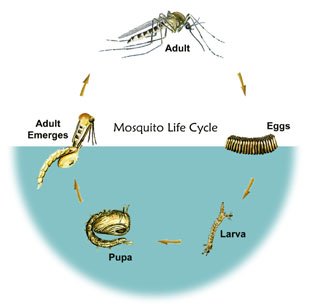
Mosquito Lifecycle
Courtesy US Environmental Protection Agency, (US EPA)
The goal of mosquito abatement is to reduce mosquito-borne infections including West Nile Virus and Equine Encephalitis. The most effective abatement efforts are prevention, including removing standing water, using barriers and larvicides where standing water can’t be removed.
To prevent bites, several types of repellents are available for humans. Horses can and should be vaccinated against West Nile Virus.
With any benefit, in this case, the control of mosquitos, there are downsides. In the case of mosquito abatement, fish, beneficial insects like bats, bees, butterflies and other wildlife tha prey on mosquitos can be harmed. Contact your abatement district if you have fish ponds or wildlife that may be harmed before spray routes are organized. We recommend you contact them by telephone as well as via webform/email.
- Logan: Please call 435-716-9749 or email Rex Davis, rex.davis@loganutah.org.
- Cache County: Please call 435-764-6839 or Email: cmad.cache@gmail.com
The Environmental Department provides mosquito abatement for the Logan City area and the Cache Mosquito Abatement District provides abatement for Cache County. Click the links below for information about mosquito controls in your area:
- Logan City Mosquito Abatement
- Cache County Mosquito Abatement
- Utah Mosquito Abatement Assoc. Districts