Thank you to all who attended and participated in our Awards Dinner.
The pictures we showed were from the adults who submitted pictures in our photo contest: https://bridgerlandaudubon.org/photo-contest/gallery/
All of the centerpieces were created by Nadra Haffar. Each plant, native and non-native, is found in Cache Valley. They were planted in white millet, which can be used to feed birds.
Awards–2024 & 2025 & Keynotes
2024
Allen W. Stokes Conservation Award: Phaedra E. Budy, Bonneville Cutthroat Trout Preservation.
Carl M. Johnson Environmental Education Award: Darren Parry, Masterful storyteller, fostering a community of native plant gardeners and environmental activists working to restore the land and to speak on behalf of the environment through an indigenous lens.
C. Val Grant Volunteer Award: Clarissa Casper, bird surveys and artivism for the North Branch of the Logan River.
Jack Greene Youth Conservation Award: Sarah Woodbury, Earth-based poet, performance artist, eco-sociologist, and multispecies justice activist.
2025
Allen W. Stokes Conservation Award: Jordy Guth, USU Bird-Friendly Building Policy.
Carl M. Johnson Environmental Education Award: Ed Stafford & Ros Brain McCann, 10 Years of the USU Extension Sustainability Clean Air Marketing Contest (2015-2025).
C. Val Grant Volunteer Award: Becky Yeager, Cache Valley Wildlife Association, Nibley Firefly Park Stewardship.
Jack Greene Youth Conservation Award: Mya Karbasi, leadership/advocacy training, organizing; GROW THE FLOW.
Speakers:
Thomas Bingham, Updated Cache Valley Bird List
Kim Sullivan, Stopping the bonk: new ways to stop birds from hitting windows
Scott Erickson, Keynote, Abundance
Eric Bingham, Bird Superpowers
Activity:
Meg Kast, Bird-Friendly Bingo!
Dr. Phaedra Budy is the Unit Leader of the U.S. Geological Society, Utah Cooperative Fish and Wildlife Unit, a Professor of fisheries management and aquatic ecology in the Department of Watershed Sciences at Utah State University (USU) and a faculty member of The Ecology Center at USU. She holds a B.S. in Limnology from the University of California, Davis and a PhD in Aquatic Ecology from Utah State
University. She does research that fits into an overall framework of evaluating the factors that structure and limit fish populations and communities in both lentic and lotic systems, and also works broadly in the conservation biology, invasion ecology, and food web dynamics of aquatic systems. Her current research covers a wide geographical range including almost all of Utah (fro m the south of the state up to high elevation points in the Bear River drainage), Nevada, New Mexico, and northern, arctic Alaska and
includes many species of salmonids, imperiled native desert fishes (e.g., the “three species”), and numerous warm water lentic fishes. She also dabbles in experimental and adaptive stream restoration and large river management. Dr. Budy currently teaches advanced graduate level classes in Fish Ecology.
Return to Top
Darren Parry, former Chairman of the Northwestern Band of the Shoshone Nation, is a prominent advocate for Native American rights and history. Parry has dedicated his career to teaching and preserving indigenous perspectives. He serves on the Board of Directors for Utah Humanities and PBS Utah, leveraging his influence to advocate for Native American issues and cultural preservation. As the author of “The Bear River Massacre, A Shoshone History,” Parry sheds light on the tragic events of the past while teaching in the Environmental Humanities Department at the University of Utah. Passionate about family and tribal heritage, Parry strives to honor the legacy of his ancestors and ensure their stories are remembered. Recently awarded an honorary degree from Utah State University, Parry continuously embodies the great values of learning, teaching, and leadership. He wants to make sure that those who have gone before him are not forgotten. He shares that “traditional Shoshone land practices are rooted in respect and reciprocity, recognizing the interconnectedness between humans and the natural world. The Shoshone people view themselves as caretakers, taking only what is necessary and ensuring resources are preserved for future generations. By prioritizing balance with the environment and integrating sustainable practices, we embody a deeper understanding of ecological balance, which aligns closely with modern principles of environmental stewardship.” He serves on Keisha’s Preserve board for the long-term protection of the watershed and essential fish and wildlife habitat. Parry’s new book “Tending the Sacred” is a reflection on the deep environmental and spiritual wisdom held within Indigenous lifeways.
Return to Top
Clarissa Casper is a journalist whose reporting in Cache Valley focused on community-driven stories about people, place, and the environment. Over the past four years, she reported for The Herald Journal, Utah Public Radio, and The Salt Lake Tribune, covering local government, land use, and environmental issues in the area. Through her reporting, she sought to connect readers with the natural spaces that shape the region and the people working to protect them.
In collaboration with community members, Clarissa designed and curated an exhibit at the Utah Pioneer Museum for the Logan Downtown Gallery Walk in 2024 exploring threats facing the Little Logan River. The project combined photography, interviews, and historic texts to highlight the river’s ecological importance and cultural history, inviting residents to reflect on their connection to local waterways.
Beyond the newsroom, Clarissa has volunteered with local environmental nonprofits, including the Bridgerland Audubon Society, and participated in community bird surveys. She has also taught a college-level English class independently and held additional teaching roles in journalism at Utah State University.
In September, Clarissa moved to Ithaca, New York, to serve as the inaugural Rachel Carson Science Journalism Fellow at the Cornell Lab of Ornithology, where she continues to write about birds, research, and conservation, building on the same curiosity and care for place that defined her work in Logan.
Return to Top
Sarah Woodbury is an Earth-based poet, performance artist, eco-sociologist, and multispecies justice activist born and raised in Utah. In 2020, Sarah created a poetry-dance film with Great Salt Lake, which she used to organize community events and conversations uplifting the sentience and rights of Lake ecologies. For five years, she has danced through Utah as a shorebird—including in the Capitol during the legislative sessions—and somehow gotten other artists to join her. She speaks, performs, organizes, rallies, and writes for local and far-flung ecologies alike, working both at international gatherings and with her local art activism collective, Apprentice. Her eco-poetry and film bring our local ecologies to prestigious art residencies and national journals, including Calyx, Sugar House Review, and The American Journal of Poetry.
Sarah’s commitment to multispecies justice is also reflected in her academics. Her Master’s research supported the Northwestern Band of the Shoshone Nation’s work healing Wuda Ogwa, explored local relationships with water and land, and examined Mormon multispecies justice in the Intermountain West. Her doctoral research builds on this, exploring Mormon ecologies and animism in the region. She has a chapter on this work forthcoming in The Oxford Handbook of Multispecies Justice.
Sarah serves on two non-profit boards: 1) Bichu-Nanewe (Return of the People), which works for Tribal Sovereignty, and 2) Los Cedros (The Cedars) Fund, a group for an Ecuadorian cloud forest who helped birth the rights of nature movement. Sarah is affiliated with New York University’s More-than-Human Life Project. As a whole, her radically interdisciplinary work seeks to entice humans into good relationship with “earthly cosmologies,” or the sacred as it is found around us.
Return to Top
Jordy Guth is the Associate Director of Planning & Sustainability, with USU Facilities Planning, Design & Construction. She has a Bachelor of Architecture from University of Idaho, a Master of Science in Bioregional Planning from Utah State University, and a license in architecture. Her experience includes 24 years work experience at USU Facilities and 7 years of experience in architectural private practice. Current job responsibilities include master planning USU campuses, early project planning and development, and sustainability initiatives. Jordy has served on the USU Sustainability Council for 18 years, was a founding member of the Cache Clean Air Consortium, and led the Cache Community Solar project. She has worked collaboratively with researchers and architects to establish LEED and bird friendly design requirements for new USU buildings. She has served on the Logan City Parks and Rec Board, Logan City Renewable Energy & Sustainability Board, and Logan City Planning Commission.
Jordy originates from the Cascades of southwestern Oregon, where she grew up on a farm fully off the grid. She put herself through college through summer work as a Forest Service firefighter. At the age of 20, she embarked on a transformative 6-month backpacking journey through Europe. For the past 24 years, Jordy has made Logan, UT her home where she and her husband have raised their two sons and built their dream home. Her personal interests include mountain biking, hiking, tennis, photography, and travel.
Return to Top
Edwin R. Stafford
Marketing? What are you doing here? You’re the enemy!”
That was someone’s quip directed at Ed at the 1997 Greening of Industry Network Conference regarding his academic discipline. While in jest, the remark was clear. Marketing has long been accused of driving overconsumption, waste, and environmental degradation.
Ed can’t recall his response, but the episode compelled him to ponder marketing’s role in sustainability. Given marketing’s understanding of consumer behavior, strategy, product design, and social influence, he determined ultimately that marketing did not have to degrade the planet but could steer society onto a more sustainable path. Indeed, we have the solutions for climate change and sustainability (e.g., renewable energy, electrification of transportation and buildings, batteries, etc.). What’s missing is effective marketing to get those solutions adopted into society.
In short, Ed sees marketing at the heart of sustainability, and as a USU marketing professor, he’s studied the diffusion of clean technologies and helped kickstart Utah’s wind industry.
The Utah High School Clean Air Marketing Contest is a partnership with Roslynn Brain McCann to engage teens learning to drive to understand the air pollution implications of their new driving privilege, adopt clean air actions (such as refrain from idling), and influence their parents to follow suit through a fun public service announcement competition. It is now in its 11th year.
Ed’s working to make induction stoves “cool” (over gas) with his daughter, Victoria, and with Roslynn, they are formulating strategies to clean up Utah’s air before the 2034 Salt Lake Winter Olympics.
Return to Top
Roslynn Brain McCann
When she interviewed at Utah State University in the winter of 2011, Ros was captivated by the beauty of Cache Valley. The Wellsville mountains were covered in white snow, and both the peaks and the valley floor were blanketed in separated cloud systems. Little did she know at that time, the valley floor was smothered in air pollution due to an inversion, experiencing a red air day. As she learned more about Utah’s air pollution over time and what that low-lying cloud layer entailed, Roslynn enthusiastically partnered with Dr. Edwin Stafford to co-launch the Utah High School Clean Air Marketing contest which now reaches over 1,000 high school students from locations ranging from southern Idaho (which shares Utah’s airshed) down to the Navajo Nation.
In addition to the Clean Air Contest, Roslynn oversees Utah State University’s Extension Sustainability Initiative where she applies conservation theory, communication techniques, and social marketing tools to foster a range of environmental behaviors. She helps lead the National Extension Climate Initiative, the Utah Farmers Market Network, Sustainable You! kids’ camps, and the USU Permaculture Initiative. Her research interests include permaculture design as a climate change adaptation and mitigation framework, sustainable food systems, Indigenous climate resilience, and expanding Extension climate change programming nationwide. Roslynn is living in Denmark for a year, working with Aarhus University on a food forest project for her sabbatical.
Return to Top
Becky Yeager
For more than 30 years, Becky has devoted herself to caring for Utah’s wildlife and wild places. Her journey began when she moved to Utah and accepted a job as a Wildlife Biologist. Today, through her work with the Beaver Ecology Restoration Center (BERC), Becky helps give beavers a second chance by relocating them to restore streams and ensuring their care during quarantine. She also helped develop the Utah Pollinator Habitat Program and turns rest areas into thriving pollinator refuges for UDOT.
Since 2019, Becky has led restoration efforts at Nibley’s Firefly Nature Park, creating two thriving pollinator habitats—one entirely native. She’s cultivated community engagement through weekly weeding efforts, seed exchanges, plantings, and monarch tagging and releases, turning conservation into a shared local tradition.
Under her leadership, the park has become a living classroom. Becky secured two UDOR grants to build an outdoor classroom and educational program at Firefly Park, complete with signage, hands-on activities, and a website. She’s also mentored scouts, installed kestrel and bat boxes, planted over 125 native trees, and obtained a TreeUtah grant to reduce light pollution for the park’s fireflies.
Becky has also been an advocate for monarch conservation for over 15 years and promotes the importance of all pollinators through hands-on efforts and public outreach, particularly during Monarch Festivals and Pollinator Week activities. Her compassion also extends to people-volunteering with the Warming Center and Street Outreach to support unhoused residents.
Becky embodies dedication, stewardship, and a deep belief that caring for nature and community go hand in hand.
Return to Top
Mya Karbasi
While at Green Canyon High School, Mya formed an environmental club and multicultural club. She is a USU junior majoring in environmental studies. Mya revived the Student Organization for Society and Natural Resources club. She is also a USU sustainability communication specialist for the Student Sustainability Corps, Intern for Cache Valley Citizens Climate Lobby, and the Northern Utah lead on “Grow the Flow” for the Great Salt Lake.
Return to Top
Speakers:
Stopping the bonk: new ways to stop birds from hitting windows
Dr. Kim Sullivan, Emeritus Associate Professor Department of Biology, Utah State University
Kim has worked on understanding and preventing bird window collisions for the past eight years on the Utah State University campus. Her recent research focused on using projected UV light onto glass to prevent collisions.
Return to Top
Scott Erickson, Author, Abundance, A Birding Memoir
Scott lives in Hyde Park, Utah with his wife, Allison. The past 35 years have been dedicated to raising a family, while working in various human resources leadership positions for international companies and serving actively in various church capacities. Decades of work with people has been balanced by a love of the quieter wonders of nature.
As a new author, Scott recently channeled his love of birds and nature into his first published book. It was written with the intent to spread joy in a turbulent world and peace amidst the commotion in our lives. His writing reflects on both the wild adventure and deep reverence experienced within the rhythms of the natural world and invites readers to slow down, observe, and connect with the abundant beauty that surrounds us.
Return to Top
Eric Bingham, Educator, Bird Superpowers
Eric is a 7th grade science teacher at Mount Logan Middle School, where he has been teaching for the past 18 years. He became passionate about birds after taking Kim Sullivan’s ornithology class at USU. Almost 20 years later he still has that passion, though he has added a camera to his outings and bird photography has only increased his love for the natural world. He has done his best to pass his passion for birding on to his students and his children. A simple hike with Eric often turns into an all-day adventure, with stops to look at all the birds, plants, and rocks, along the way (much to the chagrin of his children). For several years he ran a school club called “Birding with Bingham” where he tried to recruit new birders. He has been a guest speaker on the topic of birds at both the Smithfield and the Logan libraries, as well as leading bird hikes for numerous youth groups. He is also on the Bridgerland Audubon board and has the responsibility of overseeing the Christmas Bird Count. He was the top ebirder in the valley in 2023 and is currently the top ebirder again in 2025. In addition to birding, he also enjoys family history, gardening, reading, and spending time with his five children and beautiful wife.
Return to Top
Thomas Bingham, Expert Birder, Cache County Bird Checklist 2026
Thomas is currently a senior at Logan High School where he is a member of the student government. Thomas has been birding ever since he was old enough to hold a pair of binoculars. When he was in 7th grade he single handedly filled out an application for a Cornell scholarship online and he finished in the top ten applicants. When he was 12 years old he told his dad he wanted to go birding in Texas, to which his dad responded that he would have to save up the money to pay for himself. Much to his dad’s surprise, Thomas, who was jobless at the time, suddenly found work all around the neighborhood. By the end of the summer he had saved up the money for the trip. That was his first vacation that was all about the birds. The next year he got a group of friends together for a week-long birding trip to Arizona. Last year he and a friend birded down the coast of California and went on their first-ever pelagic birding trip, where he spotted a bird so rare that the captain turned the entire boat around on a one hour detour hoping to catch another glimpse of the rarity. Thomas is one of the best in the valley at bird identification. He can identify almost any bird in North America by sight. He currently serves as the chair of the bird checklist committee and the co-chair of the Christmas Bird Count committee.
Return to Top
Bird-Friendly Bingo! – Meg Kast
Decode your Bird-Friendly Bingo card. View the Bird-Friendly Bingo Key
Together, small changes add up to big impacts for birds. Start today, right where you are!
***** ***** *****

Save your place at the Bridgerland Audubon Society Awards Dinner, November 12, Willow Room, Riverwoods Conference Center, 615 Riverwood Pkwy, Logan, UT. Purchase your tickets by Monday Oct 27, 2025
November 12, 2025, 6-8:30 p.m.
Bridgerland Audubon Society Awards Dinner
Tickets on sale Oct 3-Oct 27
Buffet: 6-7 p.m., Cash Bar 6 p.m.
https://bridgerlandaudubon.org/shop/
- Awards:
- Jack Greene Youth Conservation Leadership
- C. Val Grant Volunteer Award
- Carl M Johnson Environmental Education Award
- Allen W. Stokes Conservation Award
- Keynote:
- Scott Erickson, “Abundance”
- Additional speakers:
- Kim Sullivan, UV Window Collision Prevention
- Eric Bingham, Bird Superpowers
- Thomas Bingham, Cache County Checklist
- Silent Auction
Purchase your tickets
$30 Chicken Paprika Buffet with punch/water, and dessert.
$30 Vegan Thai Curry with punch/water, and dessert.
Dress: Dressy Casual
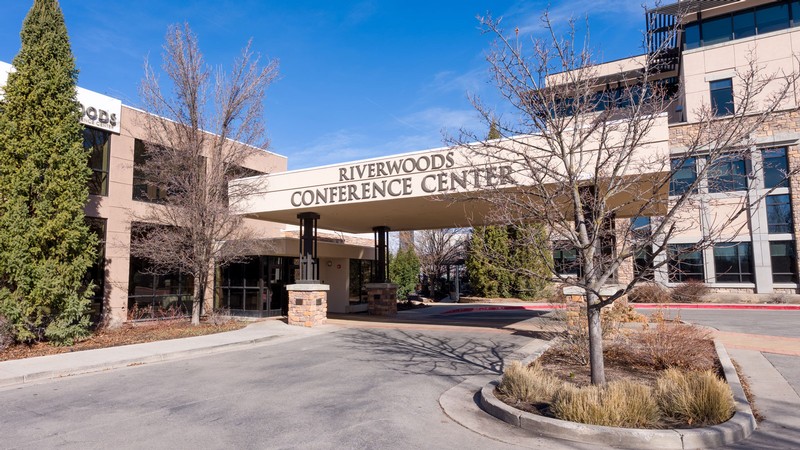
The Riverwoods Conference Center
Courtesy & Copyright Levi Sims, USU, Photographer
Venue
The Riverwoods Conference Center, Willow Room
615 Riverwood Pkwy
Logan, UT 84321
+ Google Map
Riverwoods Conference Center

Willow Room, Courtesy The Riverwoods Conference Center